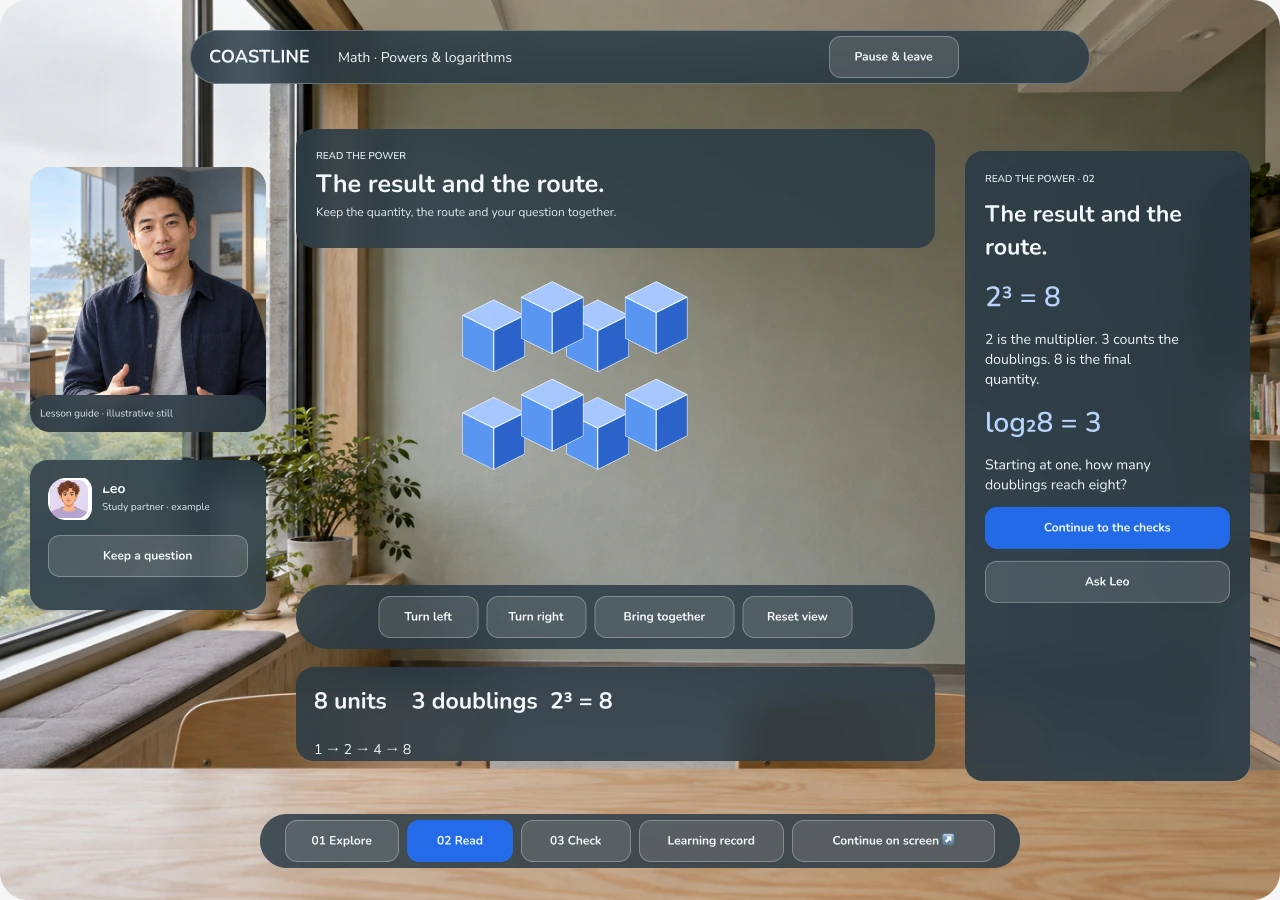
A learning object.
Eight units come from three doublings. Separate them to make the quantity visible.
The 2026 prototype, kept as a record. The current Coastline case →
Future-oriented service & interaction design
A home can change.
Learning should not have to stop.
What keeps a student connected?
A learning object, a question and a place to continue.
1 → 2 → 4 → 8

Eight units come from three doublings. Separate them to make the quantity visible.
The object and its route stay visible while a learner keeps a question for Leo.
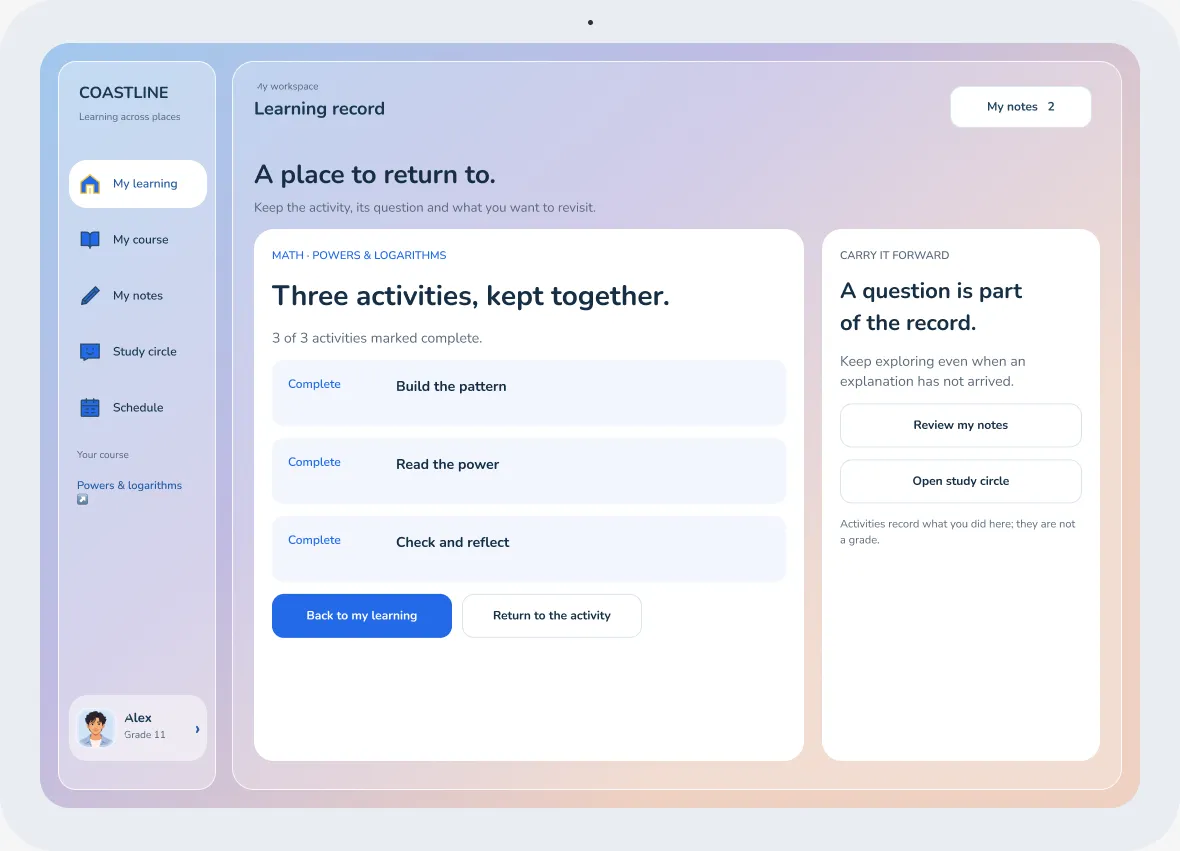
The everyday workspace keeps the activity, its question and what the learner wants to revisit.
The future as a question
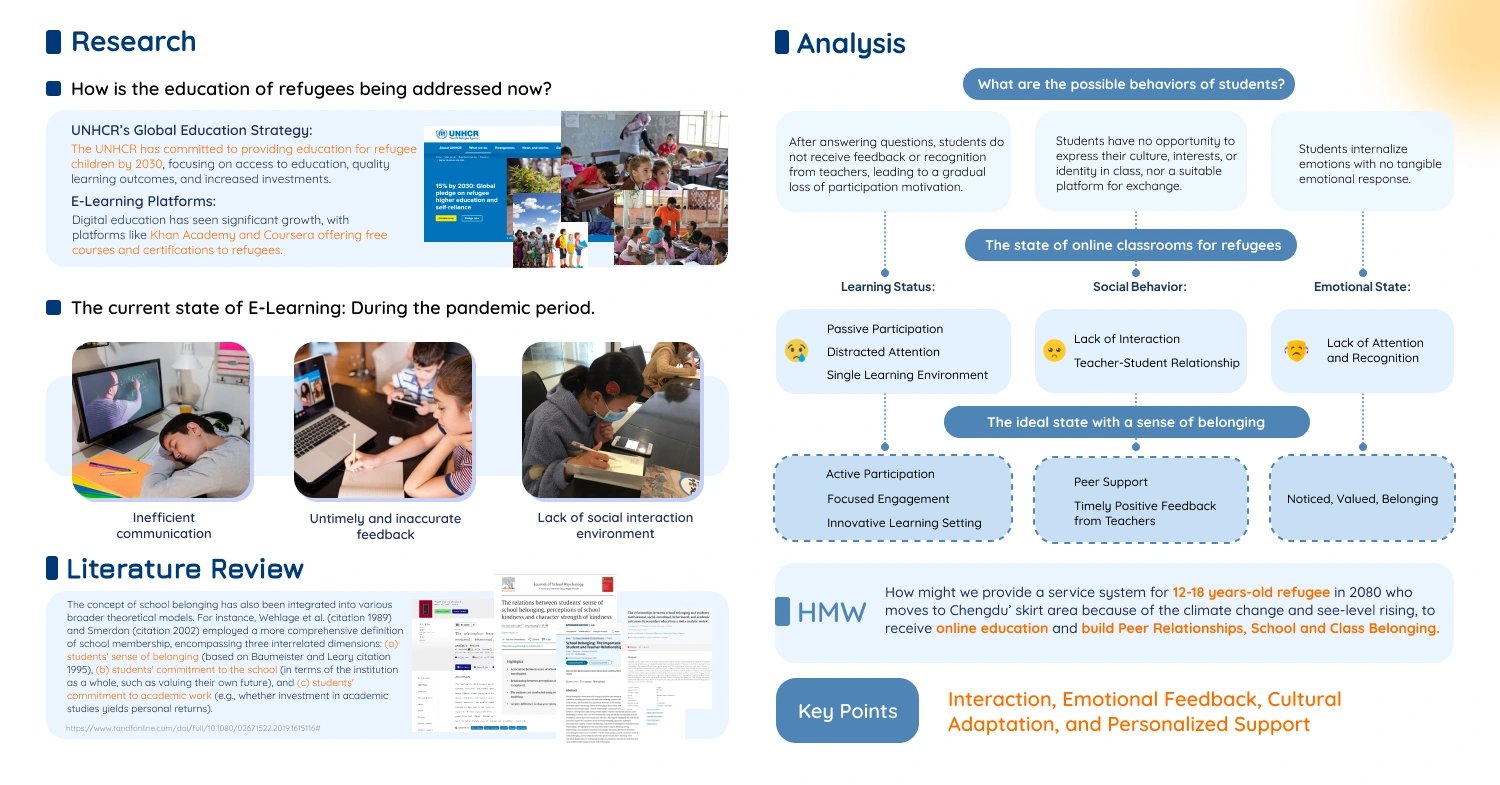
Education depends on peers, emotional support, cultural familiarity and recognition—not only access to lessons.
I used climate displacement as a speculative context to explore those dependencies. Research into refugee education, online learning and school belonging informed the question.
The future scenario is a design device, not a prediction. The project did not involve participatory research with climate-displaced students.
Original research · 2024–2025 / design synthesis · 2026
Access to a lesson is one part of learning. The original research also asked about conversation, recognition and a route to support.
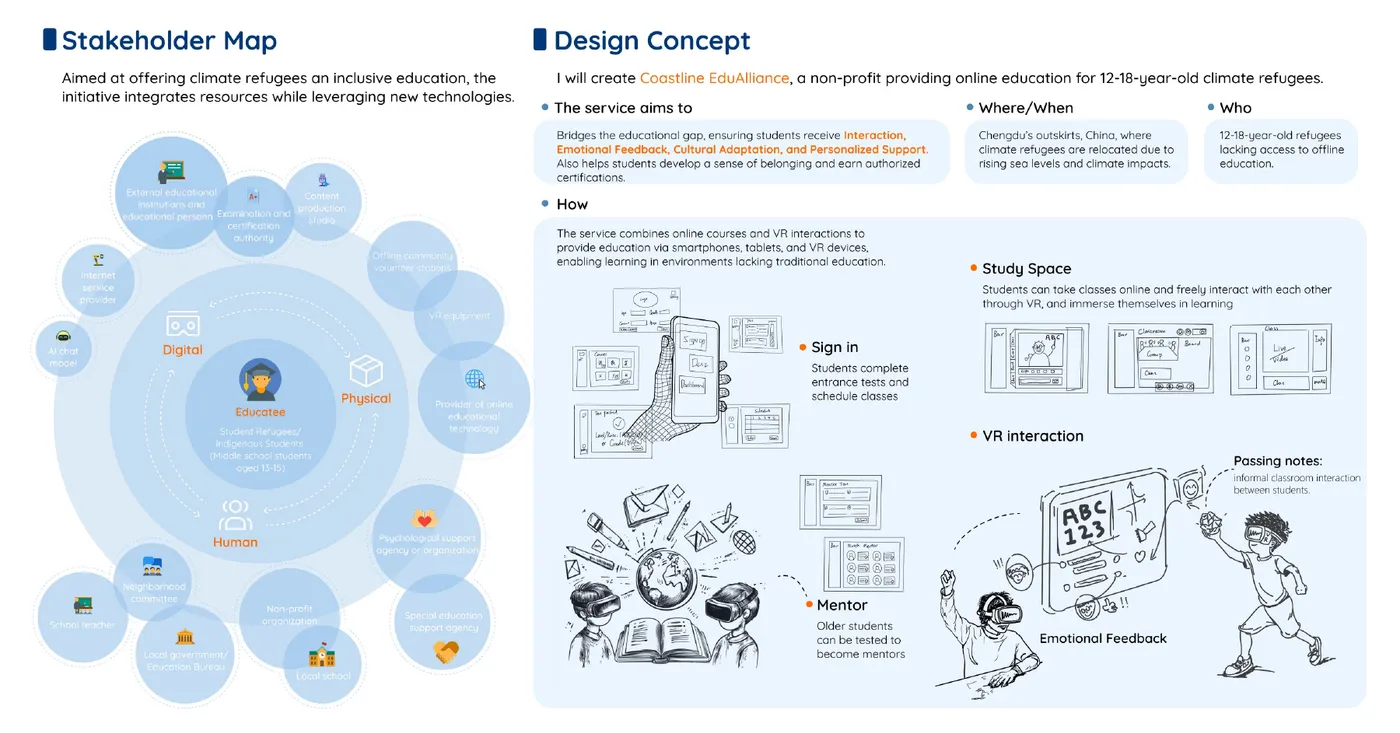
The strategy places education within national systems, local partnerships and the needs of both displaced and host communities.
 Shared stationExplore together
 Everyday screenReturn to the record
Position the service alongside schools and community support. The station is proposed; the two workspaces share a record in this browser.
See who supports the experienceThe original online-learning analysis grouped concerns around communication, delayed feedback and the lack of informal social interaction.
 LeoExample study partner
Why does the logarithm count the steps?
The current example attaches a question to its model step, so returning to it also returns to the learning context.
See the original paper interactionA meta-analytic review links school belonging with motivational, social-emotional, behavioural and academic outcomes. These are associations, not proof of an interface intervention.
These are early responses to the original cultural-adaptation and support directions. Language, culture and human availability remain open design questions.
Explore the support routesPolicy and literature review, scenario building, analysis and paper-prop exploration. The project did not involve participatory research with climate-displaced students. An AI student-roleplay plan was a scenario exercise, not participant interviews.
Conversation can become detached from the learning activity.
Keep the question beside the object.The model, the question and a study partner share one learning context.
Spatial lesson / study circleThe paper props explore an interaction; they do not establish learning outcomes.An attempt needs acknowledgement and a useful next step.
Respond to the attempt; preserve the question.Checks explain the mistake. An unanswered question can be kept and reopened.
Answer feedback / kept questionAnswer feedback is implemented. Conversation responses are preset examples.Students need room for their own interests and ways of expressing themselves.
Let the learner choose what to share.The support entry offers an optional introduction and a visible way to skip it.
Optional introduction / support choiceThis is an early design response; multilingual and cultural adaptation remain unresolved.Access to a lesson is only one part of access to learning.
Offer a route to different kinds of help.Choose an explanation, a study partner or a mentor; adjust the reading view.
Mentor directory / reading preferencesThe route is demonstrated; live availability, staffing and referrals remain proposed.Original paper-prop exploration · 2024–2025
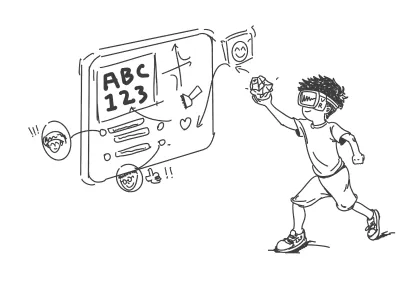
The original bodystorming explored informal classroom actions: writing, passing a note and receiving peer feedback. Those actions informed the contextual question in the current prototype.
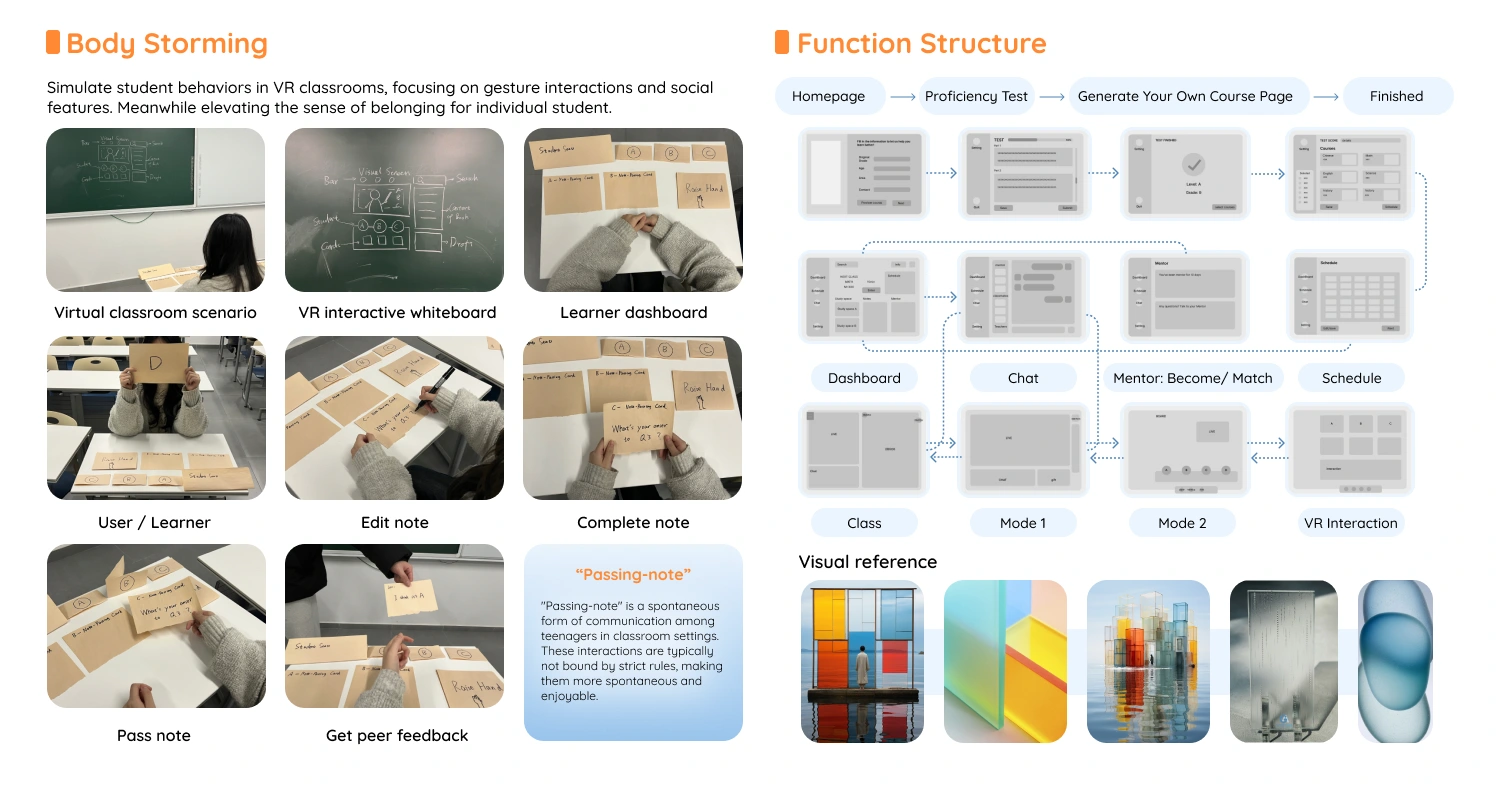
The question begins as the learner’s own draft, attached to a model step.
A study partner remains beside the learning context, with the question still visible.
A response can lead back to the pattern. When no reply arrives, the question can still be kept.
One model, its explanation and a question for someone else. Each gets space without losing the other two.
8 units · 3 doublings
Spreading the units makes each part visible. The quantity stays eight.
Turn and build the model2³ = 8
2 is the multiplier. 3 counts the doublings. 8 is the final quantity.
log₂8 = 3
Starting at one, how many doublings reach eight?
1 → 2 → 4 → 8
Try the two checksThe question stays attached to this model.
8 units · 3 doublings
Why does the logarithm count the steps?
Example question. In the lesson, the learner can keep a draft, pass a question and return whether or not an explanation arrives.
Keep your own questionAn explanation of the design. The complete lesson below keeps the learning state.
Independent development · October 2026
Join a lesson, explore the pattern, and carry your place and questions into the next visit.
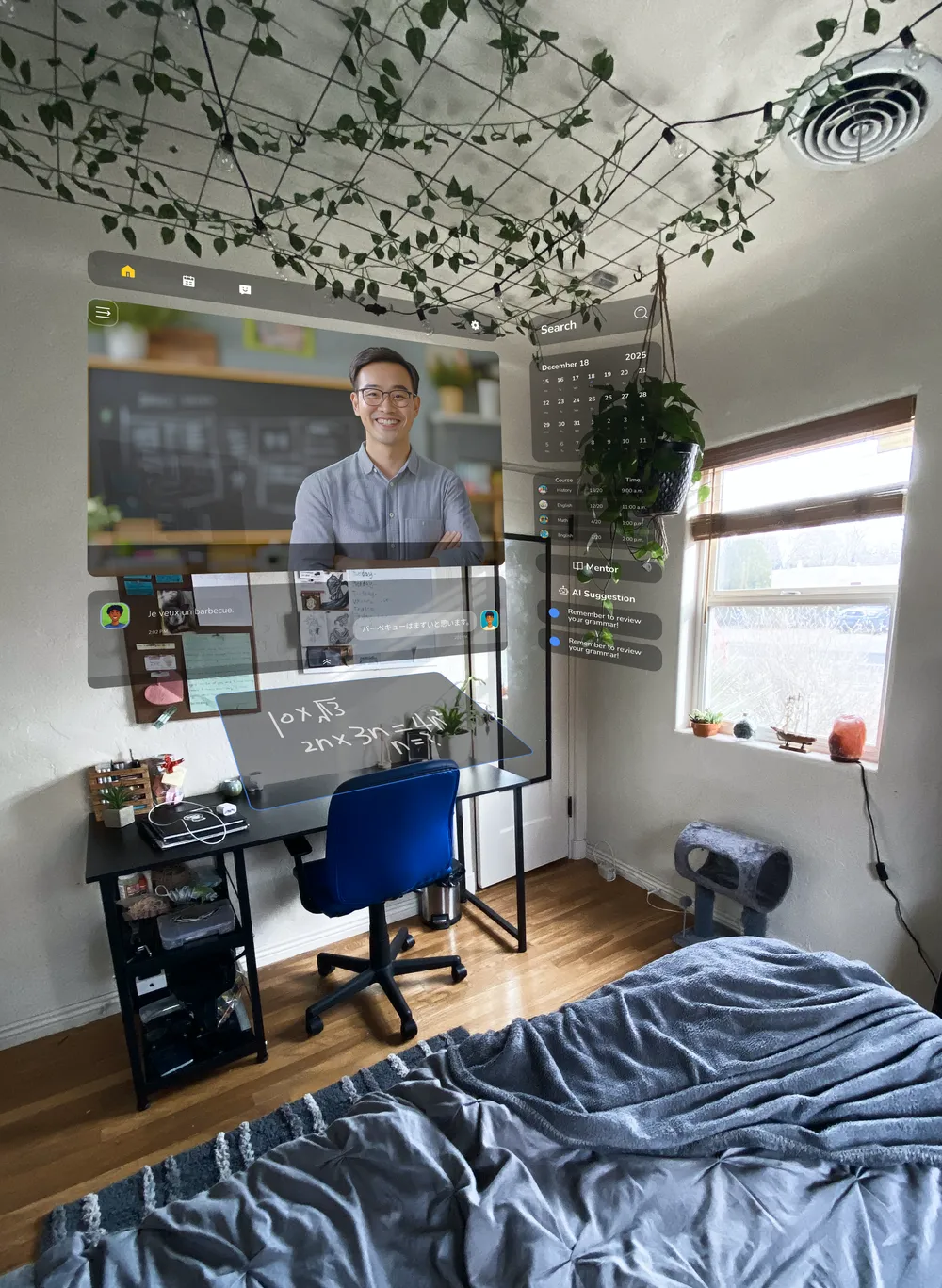
Interactive browser prototype · CSS 3D learning objects, a generated environment and an illustrative instructor. Your place, questions and notes stay in this browser; responses are manually selected examples. Space and screen share this browser’s course record. Headset interaction, cross-device sync and learning outcomes have not been tested.
Use this to explore waiting and recovery without sending a message to anyone.
Rotation reveals depth. Spreading the units makes every part visible before returning to the assembled pattern.
Leaving a lesson keeps the model, your view and your question together. The next visit starts from that place, with help still beside the task.
From the spatial lesson to the everyday screen
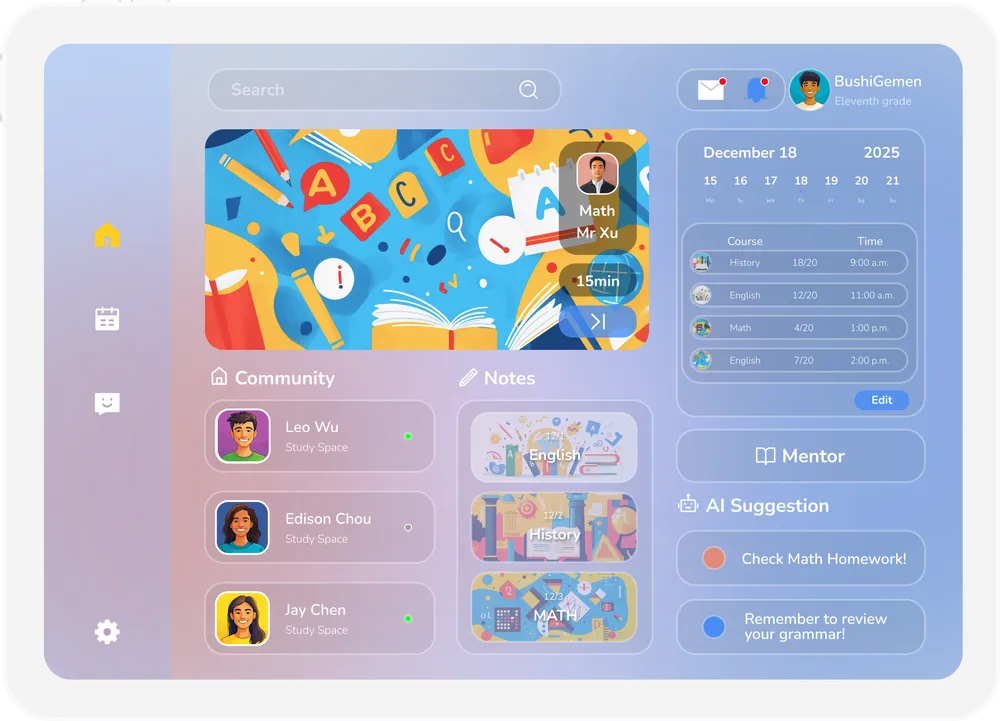
A task, its model step and a kept question travel together. The current prototype connects the two workspaces within this browser.
Why does the logarithm count the steps?
The same learning, within reach
Continue a lesson, refine a thought and mark what matters before the next visit. The original blue, lavender and warm peach surround a calm space for reading and touch.
Source-led iPad UI · Illustrated profiles and teaching still · One example math unit connects lessons, notes and support. Your place stays in this browser. Replies are preset examples; no messages are sent.
A route to help, without losing the task
Two example outcomes share the same model context. A missing reply leaves a way to keep the question and return.
Count the doublings: 1 → 2 → 4 → 8. There are three changes, so log₂8 = 3.
Read the explanation → Revisit the pattern
Why does the logarithm count the steps?
Keep a personal record and continue exploring. The question remains linked to the step where it began.
Keep the question → Continue learning
A proposed service, across places
Coastline proposes a support layer alongside schools and community services. A shared station offers spatial exploration; the everyday workspace keeps learning within reach.
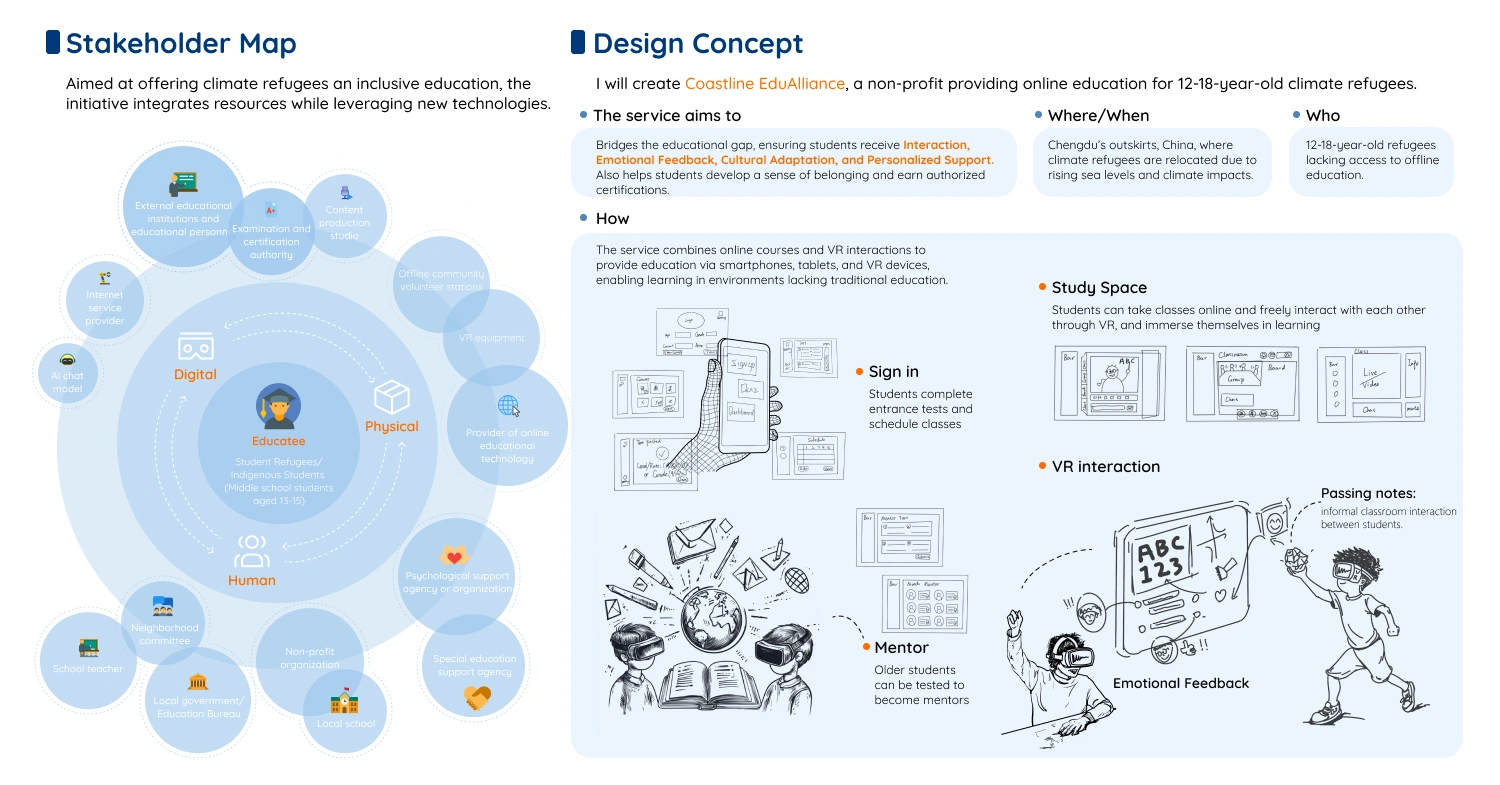
The task, the question and the next step travel together.
Chooses a task, expression and support; keeps their own record.
A proposed human route for explanation, acknowledgement and further help.
Proposed community staff help with access, equipment and first use.
Proposed educators connect activities to learning paths and wider recognition.

One task, one model step, a question and a place to return to.
Students aged 12–18Course, notes, reading preferences and a record to revisit.
Open the iPad workspace ↗Current browser prototype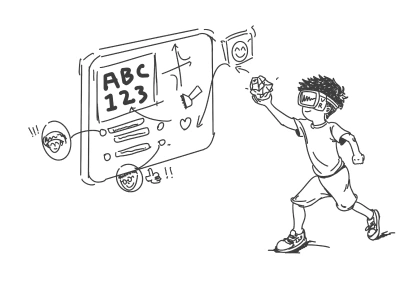
The original station concept connects equipment, access and a local host.
Explore the spatial lesson ↗Spatial view demonstrated; station proposed
Study partners, mentors and educators support a question that the screen cannot resolve.
Find the mentor route ↗Example profiles and conversationsThe wider service Schools and content providers prepare learning paths. Community hosts support access. Connectivity, equipment, moderation and referral arrangements make these touchpoints possible. These responsibilities remain proposed.
The task, model step and kept question
Demonstrated between two views in the same browserKeep the question, then return to the pattern
Demonstrated with preset outcomesA personal session and a safe sign-out
Service requirement; not implementedOrganisations and roles are proposed, not confirmed partners. Spatial and screen workspaces are browser prototypes; the physical station remains a service concept.
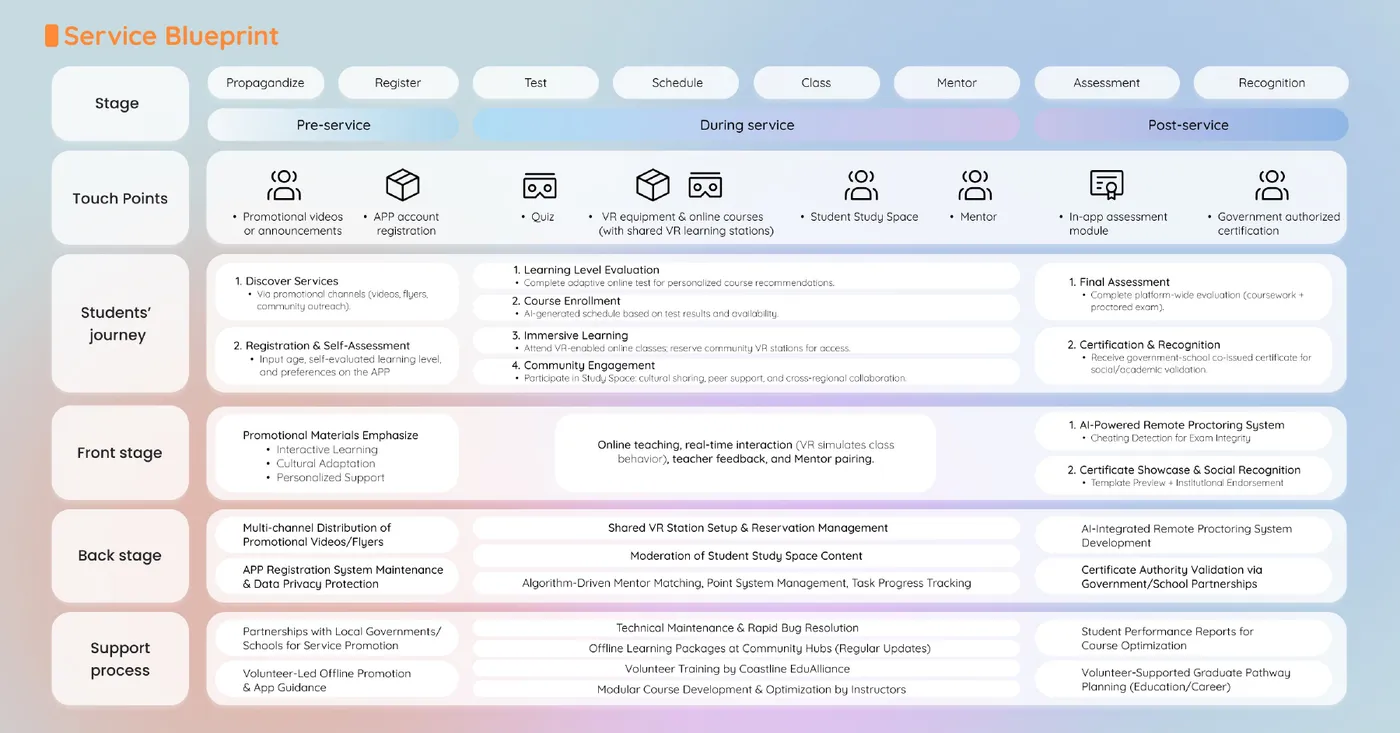
Current service blueprint · independent development, 2026
The blueprint follows the demonstrated journey and makes the responsibilities beyond the interface explicit.
Learner actionChoose an everyday screen or a shared place to learn.
Visible experienceCourse entry explains the two workspaces.
Proposed deliveryCommunity staff would help with access, equipment and first use.
Support requiredA local host would need device upkeep, connectivity and a clear first-use guide.
Current boundaryCourse entry works; the physical station remains proposed.
Learner actionChoose a reading view and a form of help. Share an introduction only if wanted.
Visible experienceExplanation, partner and mentor routes make help visible.
Proposed deliveryMentors and staff would explain their availability and route requests.
Support requiredThe service would need mentor preparation, appropriate moderation and referral arrangements.
Current boundaryLocal preferences and example profiles work; no matching or live availability.
Learner actionBuild the pattern, explain it, check an answer and keep a question nearby.
Visible experienceSpecific feedback explains the answer. A question retains its model step.
Proposed deliveryEducators would prepare activities; a hosted service would route messages.
Support requiredContent review, storage and message delivery would support the activity.
Current boundaryOne operable unit; conversation replies are preset examples.
Learner actionKeep a thought and pause with a clear place to return to.
Visible experienceThe record, editable note and text download preserve the activity.
Proposed deliveryThe prototype uses this browser's storage. A service would need account continuity.
Support requiredShared devices would require a private session, sign-out and data-handling process.
Current boundaryLocal saving and text download work; no account sync or shared-device session.
Learner actionReopen the same step; continue while a question is still unanswered.
Visible experienceContinue and return-to-pattern routes reconnect the learning context.
Proposed deliveryPeople would respond or refer the learner to another source of help.
Support requiredSchools and community services would agree responsibilities and escalation routes.
Current boundarySame-browser return works; human support and wider recognition remain proposed.
Choose a stage to read its visible experience and proposed delivery. The complete blueprint below preserves every service layer.
| Service layer | Find a way in | Choose support | Explore and ask | Pause and carry | Return or seek help |
|---|---|---|---|---|---|
| Touchpoints | Course entry / shared station | Preferences / mentor directory | Model / checks / contextual question | Linked note / activity record / text kit | Continue entry / kept question |
| Learner actions | Choose an everyday screen or a shared place to learn. | Choose a reading view and a form of help. Share an introduction only if wanted. | Build the pattern, explain it, check an answer and keep a question nearby. | Keep a thought and pause with a clear place to return to. | Reopen the same step; continue while a question is still unanswered. |
| Line of interaction | |||||
| Visible experience | Course entry explains the two workspaces. | Explanation, partner and mentor routes make help visible. | Specific feedback explains the answer. A question retains its model step. | The record, editable note and text download preserve the activity. | Continue and return-to-pattern routes reconnect the learning context. |
| Line of visibility | |||||
| Backstage actionsProposed service | Community staff would help with access, equipment and first use. | Mentors and staff would explain their availability and route requests. | Educators would prepare activities; a hosted service would route messages. | The prototype uses this browser's storage. A service would need account continuity. | People would respond or refer the learner to another source of help. |
| Line of internal interaction | |||||
| Support processesProposed service | A local host would need device upkeep, connectivity and a clear first-use guide. | The service would need mentor preparation, appropriate moderation and referral arrangements. | Content review, storage and message delivery would support the activity. | Shared devices would require a private session, sign-out and data-handling process. | Schools and community services would agree responsibilities and escalation routes. |
| Prototype boundary | Course entry works; the physical station remains proposed. | Local preferences and example profiles work; no matching or live availability. | One operable unit; conversation replies are preset examples. | Local saving and text download work; no account sync or shared-device session. | Same-browser return works; human support and wider recognition remain proposed. |
The unanswered question keeps its learning context. The prototype does not assume that a person will reply immediately.
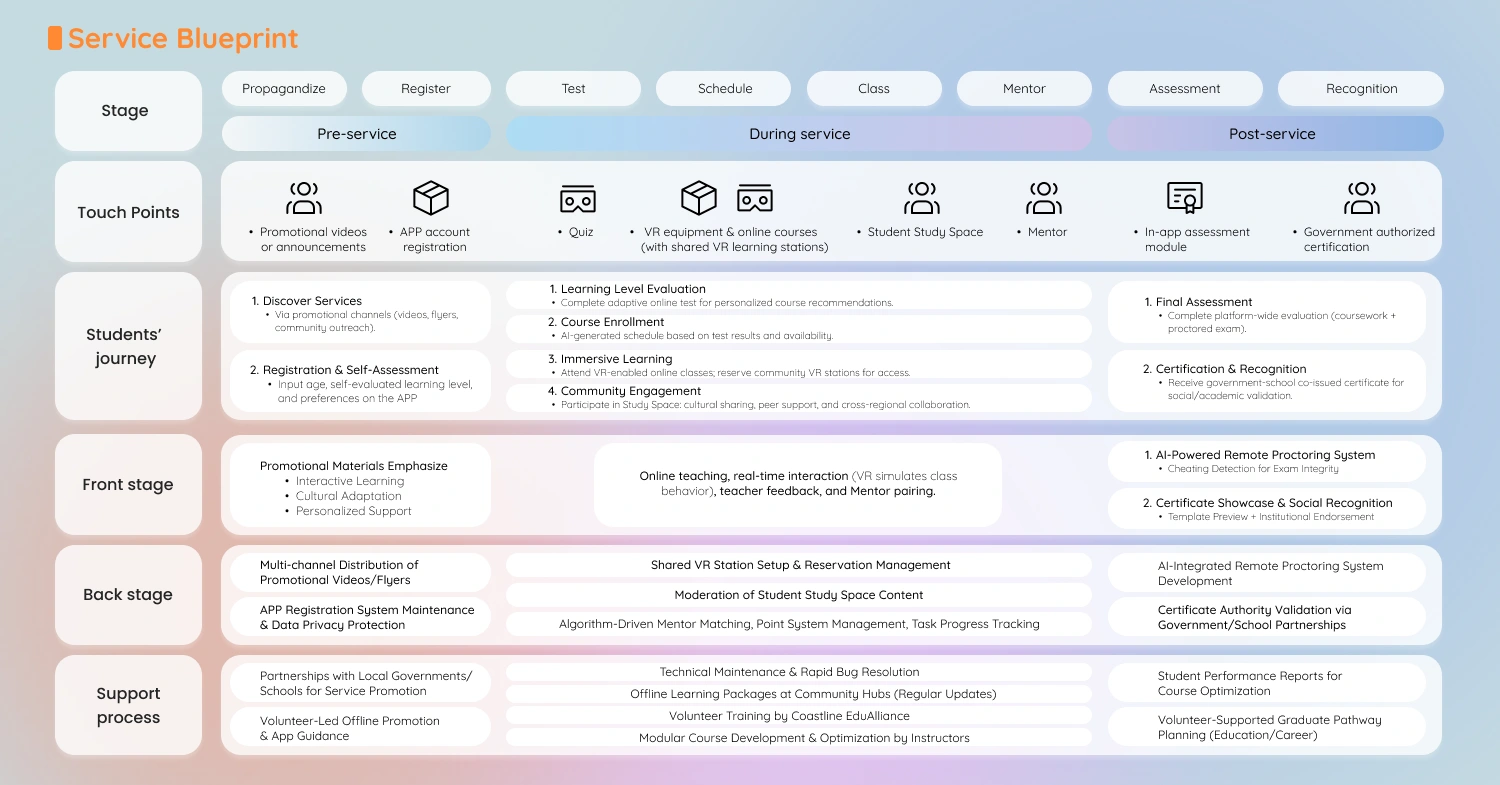
The current diagram retains the original touchpoints, learner, frontstage, backstage and support layers. Its visible / internal boundaries follow NN/g’s service-blueprint structure ↗.
The learning record documents prototype activities. It is not a grade or certificate. Account sync, live support, school partnerships, formal assessment and accreditation remain outside the implemented prototype.
What the work establishes
The work connects a future scenario to stakeholders, touchpoints and a service blueprint.
It does not establish the viability of a VR service, a working certification platform or improved learning outcomes. Those assumptions would need further inquiry before implementation.
Original work · 2024–2025 / independent development · 2026
The original research and paper-prop exploration remain the foundation. The 2026 development makes one learning unit operable, connects the two workspaces and narrows the service blueprint to the demonstrated journey.